
ESG Reporting in Saudi Arabia: From Voluntary Disclosure to Strategic Imperative
 Ghewa Ghtaimy|
A New Lens on Corporate Performance
Over the past decade, the way organizations are evaluated has expanded well beyond financial performance. Investors, regulators, employees, and communities are increasingly asking a broader question: how is value created, and at what cost to society and the environment? This shift has brought Environmental, Social, and Governance (ESG) considerations from the margins of corporate responsibility into the core of corporate decision-making, and ESG reporting has become the primary mechanism through which that performance is assessed and communicated.
At its core, ESG reporting is the structured disclosure of how an organization manages its environmental footprint, social responsibilities, and governance practices. It translates non-financial performance into measurable and comparable information that supports investment decisions, risk management, and long-term resilience. While early ESG reports often took the form of narrative sustainability brochures, today’s disclosures are increasingly data-driven, target-oriented, and expected to demonstrate a clear connection to strategy and value creation.
The global ESG reporting architecture
This evolution has been shaped by the development of several international reporting frameworks, each serving a distinct function within the broader reporting ecosystem.
The Global Reporting Initiative (GRI) standards remain the most widely adopted globally, focusing on an organization’s impacts on the economy, environment, and people. GRI emphasizes transparency and accountability to a broad range of stakeholders, making it a natural starting point for organizations building their first structured disclosure.
The Task Force on Climate-related Financial Disclosures (TCFD) established the dominant structure for climate-related reporting, covering governance, strategy, risk management, and metrics. For any organization with meaningful climate exposure, TCFD-aligned disclosure has moved from best practice to market expectation.
The Sustainability Accounting Standards Board (SASB) introduced an industry-specific lens, helping organizations identify the sustainability topics most likely to affect financial performance in their sector. For a petrochemical company, the material issues look fundamentally different from those of a bank or a telecom, and SASB reflects that distinction. This sector-specific thinking has since been absorbed into a broader architecture: in 2022, the IFRS Foundation acquired SASB, integrating its industry-specific materiality approach into the foundation of what would become the global standard.
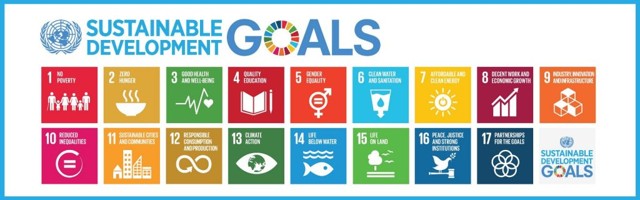
Many organizations also map their ESG performance to the United Nations Sustainable Development Goals (UN SDGs), contextualizing their contributions within a globally recognized development framework, a practice that carries particular relevance in the Saudi context given Vision 2030’s deliberate alignment with several SDG priorities.
The Saudi Context: A Market in Motion
Saudi Arabia is experiencing its own ESG inflection point, and the pace is accelerating. The regulatory groundwork has been laid in stages: the Capital Market Authority (CMA) issued voluntary ESG disclosure guidelines as early as 2019, and the Saudi Exchange followed with its own ESG Disclosure Framework in 2021 to support listed companies in identifying material topics, selecting appropriate international frameworks, and improving the quality and consistency of their reporting.
The signals from both regulators and markets have grown considerably sharper since then. In January 2023, the GCC Exchanges Committee, chaired by the Saudi Exchange, introduced a unified set of 29 ESG disclosure metrics for listed companies across the region, covering greenhouse gas emissions, energy and water usage, gender diversity, and governance standards. While voluntary, these unified metrics represent a meaningful step toward regional comparability and raise the bar for what credible disclosure looks like. The same year, the Saudi Exchange launched a dedicated ESG index, giving the market a concrete benchmark for sustainability performance among listed companies.
The deeper context, however, is Vision 2030. Saudi Arabia’s national transformation agenda has placed sustainability, social development, and governance reform at the center of how the Kingdom is repositioning itself, to international investors, global partners, and its own population. The Public Investment Fund (PIF), with its commitment to integrating ESG criteria across its investment decisions, is reinforcing that signal from the top of the capital structure downward. For Saudi companies, ESG is not external pressure from foreign markets; it is structurally embedded in the direction the country has chosen.
Adoption is still in its early stages. By the end of 2023, approximately 13 out of 217 listed companies had published formal sustainability reports. By 2024, that number had grown to 94, with the top 65% of TASI companies by revenue disclosing sustainability metrics, a meaningful increase that reflects growing awareness, even if the quality and depth of disclosure vary considerably across the market.
Early adopters shaping the direction
A group of Saudi companies has moved ahead of the broader market, and their approach offers a useful reference point. Saudi Aramco publishes comprehensive sustainability reports covering climate strategy, human capital development, and governance practices in detail. Stc Group focuses its disclosure on areas directly material to its business: digital inclusion, data privacy, and environmental efficiency. Al Rajhi Bank has aligned its reporting with GRI standards and the Saudi Exchange ESG Disclosure Guidelines, demonstrating that internationally comparable disclosure is achievable within a Saudi context. SABIC integrates sustainability performance into its broader corporate disclosures, reflecting a more mature position where ESG is not a standalone report but a dimension of overall performance management.
What distinguishes these efforts is not the volume of information disclosed, but the intent behind it. ESG reporting is being used as a management tool to inform strategy, strengthen governance, manage long-term risks, and build credibility with investors and stakeholders rather than as a standalone exercise in transparency.
From Disclosure to Strategic Capability
In Saudi Arabia, ESG reporting remains largely voluntary, but the strategic logic is already decisive. As global standards converge around ISSB, as the CMA moves closer to mandatory requirements, and as international investors increasingly factor ESG credentials into capital allocation decisions, organizations that have already embedded reporting into their governance and performance management will be far better positioned than those who treat it as a future compliance obligation.
The organizations that begin building that capability now (the data infrastructure, the governance structures, the materiality frameworks) will not only meet future requirements with confidence, they will have turned a reporting obligation into a genuine competitive advantage.